
Surgical Journey
What does the surgical journey look like?
Rapid Access Clinic (RAC) for Hip and Knee Arthritis
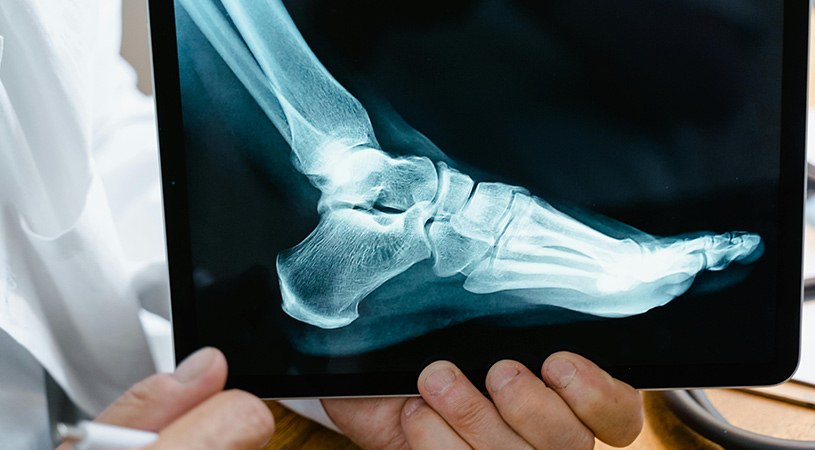
First, patients with hip and knee arthritis are initially assessed by an Advanced Physiotherapy Practitioner (APP). You will have up to date x-rays taken and a physical examination done by the APP. The RAC appointment involves a comprehensive musculoskeletal assessment and education about treatment options.
If you are a surgical candidate, you will then be referred to see Dr. Rodriguez-Elizalde at the next available clinic in consultation.
A surgical consultation with Dr. Rodriguez-Elizalde is required to make sure surgery is right for you, and to describe the procedure best suited for you. The risks and benefits of surgery will be discussed in detail with you. Once you have agreed to surgery, you will complete the required documents including the consent form.
The office will call you after your clinic appointment to book a surgery date. Unfortunately, we are unable to book a surgery date at the same time as your clinic appointment due to an extensive waitlist, and fluctuating schedules.
If you need to cancel or change your surgery date, please do so at least six weeks in advance.

The Surgical Pre-Screening Clinic provides care and education to patients before surgery. This is a multi-disciplinary clinic who will assess, educate, and prepare you for surgery. All patients require a pre-assessment appointment prior to surgery.
All patients undergoing hip and knee replacement require an in-person appointment to obtain bloodwork, an ECG, and up-to-date x-rays. An educational app and remote monitoring tool will be discussed and you are encouraged to sign up here.
The pre-assessment clinic will give you instructions about which regular medications you should continue before surgery. Most of your regular home medications should be continued before and after surgery.
Please bring a list of your current medications. Some medications, such as blood thinners or immunosuppressants, need to be stopped prior to surgery.

On the day of surgery, please arrive at your scheduled time:
Humber River Hospital – Surgical Reception, 2 nd floor, use the Main elevators
1235 Wilson Avenue
Toronto, Ontario
M3M 0B3
Drop off at Portal C, in front of hospital, off Sir William Hearst Ave
Please ensure that you have arranged somebody to pick you up after surgery to take you home. If you live alone, you must arrange for a friend or relative to pick you up and stay with you for the first 48 hours.
Humber River Hospital – Surgical Reception, 2nd Floor, use the Main Elevators
You will need to check in approximately 2 hours before surgery. You will be given a patient wrist band and proceed to the Pre-Operative Unit where you will change into a hospital gown. Do not bring valuables to the hospital.
You will then meet a Pre-operative nurse who will review your medical information and confirm your surgery. You will be given an intravenous (IV) and pre-operative medications to help with pain and nausea after surgery.
Following this, you will meet the Anaesthesiologist and discuss the anaesthesia plan. Peripheral nerve blocks and spinal anaesthesia are performed in the “block room” prior to entry into the OR. You will be “frozen” from the waist down during surgery, and sedated, so you don’t hear, see or recollect any of the operative procedure. Most surgeries don not require the use of general anaesthetics (GA).
Dr. Rodriguez-Elizalde, or his designate (including surgical residents and fellows) will meet you before surgery to answer any last-minute questions, confirm the consent form, and mark your surgery site with a permanent marker.
You will then be taken to the Operating room, and positioned on the surgical table. There will be a lot of people in the room, including nurses, surgical assistants, anesthesiologists, porters and your surgeon.
A ‘time-out” or “surgical checklist” will be performed to ensure accuracy of the procedure, correct limb, the necessary surgical instruments and anaesthetic plan. You will then be sedated and surgery will begin. Music may be playing…
PACU - Post Anesthetic Care Unit
After surgery you will be transferred to the Post Anaesthetic Care Unit (PACU) where you will be monitored and have x-rays taken (if appropriate). This is where you wake up, though you may not remember the experience. Once your sedation has worn off, and you are medically
stable, you will be transferred to the DSU.
Note: Some patients who are awake and comfortable may be transferred directly to the Day Surgery Unit, and bypass the PACU completely.
DSU - Day Surgery Unit
You will then be transferred to the Day Surgery Unit (DSU) where you will be monitored by the DSU nurse and assessed by the physiotherapy team prior to discharge.
One family member will be able to visit you once you have been transferred to the DSU.
You will be assessed by our physiotherapy team prior to discharge. They will make sure that you are mobilizing safely prior to going home. This typically includes a stairs assessment. If you are not safe to be discharged than you will be admitted to hospital overnight.
The Day Surgery Unit nurse will review your post-operative prescriptions with you prior to discharge. It is important to take the medications as instructed. We recommend getting your blister pack packaged medications from Rexall downstairs prior to discharge.
Wound Management
Bulky dressings can be removed the day after surgery. Please do not remove the waterproof bandage over your incision until you are assessed in the fracture clinic at your follow-up appointment. Dr. Rodriguez-Elizalde sees his post-operative patients in the fracture clinic on Wednesday afternoons.
Please keep the bandage and dressings dry until the wound is completely healed. Do not submerge your wound in water. Avoid baths, swimming pools, steam rooms, or hot tubs for 3 weeks after surgery.
Follow-up appointment
Dr. Rodriguez-Elizalde sees his post-operative patients in the fracture clinic on Wednesday afternoons.
Humber River Hospital – Portal “D”, main Floor, use the WEST entrance and parkade
1235 Wilson Avenue
Toronto, Ontario
M3M 0B3
Most patients will have a follow-up appointment scheduled two weeks after surgery. Patients undergoing a total hip replacement will generally be assessed one week after surgery, and knee replacements at 2 weeks. Depending on scheduling, this may vary by 1 or 2 days.